
The Importance of Cyber Threat Intelligence in Military Missions: Concepts, Definitions, and Benefits

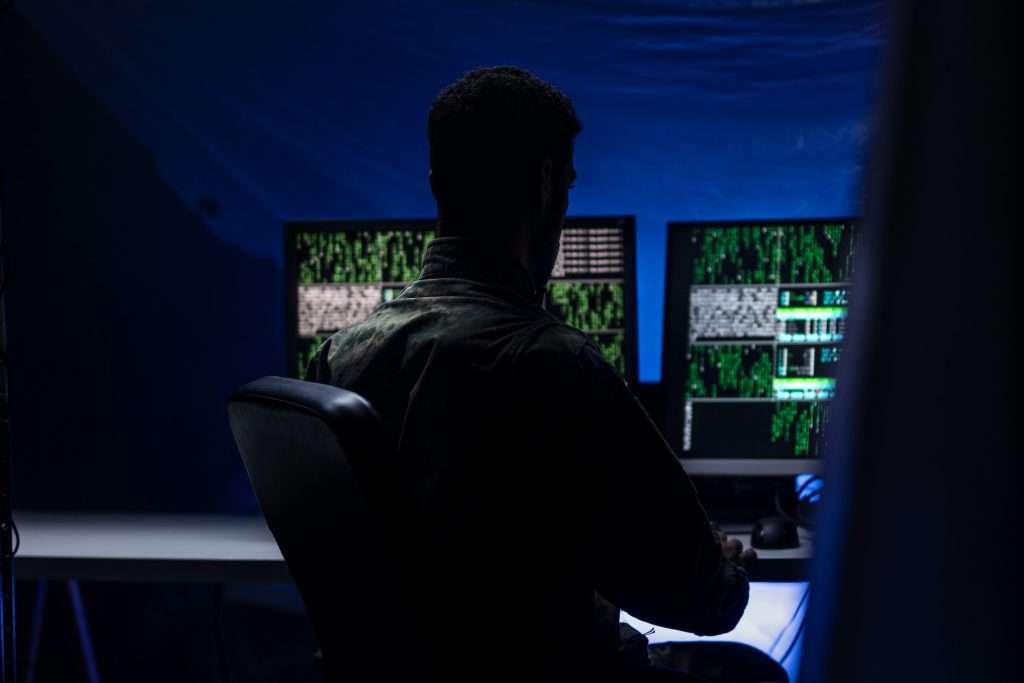
Anonymous hacker in military unifrorm on dark web, cyberwar concept.

Understanding Cyber Threat Intelligence

In recent years, cyber threats have grown significantly in frequency and sophistication, affecting not only individuals and organizations but also military operations. To combat these threats, a new field of knowledge has emerged: cyber threat intelligence (CTI). CTI is the process of collecting, analyzing, and disseminating information about potential cyber threats to decision-makers. In military contexts, CTI is critical in ensuring the safety, effectiveness, and success of missions.

Why Cyber Threat Intelligence is Critical in Military Missions

Military missions are complex and highly vulnerable to cyber attacks, which can compromise the confidentiality, integrity, and availability of information and services. CTI is critical in military missions because it provides decision-makers with accurate and timely information about potential cyber threats, allowing them to assess the risks and take appropriate measures to mitigate them. CTI can also help military organizations better understand the motives, tactics, and capabilities of potential adversaries, which can inform their own strategies and operations.

Cyber Threat Intelligence: Key Concepts and Definitions

CTI is a multidisciplinary field that encompasses various concepts and definitions. Some of the key concepts and definitions include threat intelligence, which refers to the knowledge about potential cyber threats; threat actors, which are the individuals or groups responsible for cyber attacks; indicators of compromise (IOCs), which are signs that an attack has occurred or is likely to occur; and attack vectors, which are the methods used by threat actors to exploit vulnerabilities. CTI also relies on various tools and techniques, such as data mining, machine learning, and human expertise.

The Role of Cyber Threat Intelligence in Military Operations

In military operations, CTI plays a critical role in ensuring the safety, effectiveness, and success of missions. CTI can help military organizations identify potential cyber threats and vulnerabilities, assess the risks and impacts of these threats, and develop strategies and tactics to mitigate them. CTI can also help military organizations monitor and analyze the actions of potential adversaries, such as their communications, movements, and activities, to detect and prevent attacks. CTI can also support situational awareness, decision-making, and communication during military operations.

Benefits of Using Cyber Threat Intelligence in Military Missions

The benefits of using CTI in military missions are numerous. CTI can help military organizations better understand the threats and vulnerabilities they face, which can inform their risk management and security strategies. CTI can also help military organizations save time and resources by providing them with accurate and timely information about potential threats, allowing them to prioritize their efforts and focus on the most critical issues. CTI can also help military organizations enhance their situational awareness and decision-making by providing them with a comprehensive and up-to-date picture of the cyber threat landscape.

Challenges of Implementing Effective Cyber Threat Intelligence

Despite its benefits, implementing effective CTI in military missions can be challenging. Some of the challenges include access to and sharing of information, data quality and accuracy, interoperability and integration of tools and systems, and coordination and collaboration among stakeholders. Another challenge is the need for human expertise and skills, such as intelligence analysis, data interpretation, and decision-making, which are critical in making sense of CTI.

Best Practices for Developing a Cyber Threat Intelligence Strategy

To develop an effective CTI strategy for military missions, it is important to follow some best practices. These include defining the goals and objectives of CTI, identifying the stakeholders and their roles and responsibilities, establishing the sources and methods of CTI, developing the criteria and metrics for evaluating CTI, and ensuring the quality and accuracy of CTI. Other best practices include fostering a culture of collaboration and sharing among stakeholders, investing in the right tools and technologies, and continually improving and updating CTI.

Emerging Trends in Cyber Threat Intelligence for Military Missions

The field of CTI is constantly evolving, and new trends and developments are emerging. Some of the emerging trends in CTI for military missions include the use of artificial intelligence and machine learning to automate and enhance CTI processes, the integration of CTI with other forms of intelligence, such as human and signals intelligence, the development of new CTI standards and frameworks, and the expansion of CTI to non-traditional domains, such as social media and the Internet of Things.

The Future of Cyber Threat Intelligence in the Military

The future of CTI in the military looks promising, as new tools, technologies, and practices are being developed and adopted. However, to fully leverage the benefits of CTI, military organizations need to address the challenges and invest in the necessary resources and capabilities. CTI is not a silver bullet, but it can significantly improve the resilience, agility, and effectiveness of military missions in the face of growing cyber threats. By staying alert, informed, and prepared, military organizations can better protect their assets, operations, and personnel from cyber attacks.

Resources and Further Reading on Cyber Threat Intelligence

  • The Cyber Threat Intelligence Integration Center (CTIIC)
  • The Cybersecurity and Infrastructure Security Agency (CISA)
  • The National Cybersecurity and Communications Integration Center (NCCIC)
  • The MITRE ATT&CK Framework for Cyber Threat Intelligence
  • The SANS Cyber Threat Intelligence Summit
  • The Cyber Threat Intelligence Network (CTIN)
  • The Cyber Threat Intelligence and Incident Response Report by Forrester Consulting

VeriTech Services

True Tech Advisors – Simple solutions to complex problems. Helping businesses identify and use new and emerging technologies.

Michael Murphy

Cloud Engineering Team Lead

Michael is a cloud engineering and technology leader with seven years of IT experience spanning networking, cybersecurity, systems administration, and cloud engineering. He specializes in designing and supporting cloud-based solutions, strengthening cybersecurity postures, coordinating complex technical initiatives, and developing effective technology strategies across rapidly evolving environments. His experience spans AWS, Google Cloud Platform (GCP), and Microsoft Azure, allowing him to help organizations evaluate, implement, and support solutions across multiple cloud platforms.
 
As Cloud Engineering Team Lead at VeriTech Consulting, Michael is responsible for incident response planning, cybersecurity posture management, cloud service coordination, and facilitating the technical requirements necessary to implement new services. He works across cloud platforms to help translate organizational needs into practical technical solutions, coordinate dependencies, and ensure complex cloud computing initiatives are executed effectively. He also leads the delegation and coordination of technical tasks, helping engineering teams break down complex requirements into manageable workstreams while maintaining focus on security, reliability, and operational effectiveness.
 
Michael began his career in IT through roles focused on network administration and systems administration, including serving as a Network Administrator in the United States Marine Corps and later as a Network and Systems Administrator for a school district. He joined VeriTech Consulting part-time in 2024, transitioned to full-time in 2025, and was promoted to Cloud Engineering Team Lead in 2026. This progression reflects his ability to combine hands-on technical expertise with leadership, problem-solving, and organizational coordination.
 
Michael is also a six-year United States Marine Corps veteran, where he earned the rank of Sergeant and developed a strong foundation in leadership, accountability, discipline, and team development. His military experience emphasized leading by example, making decisions under pressure, delegating responsibilities, developing junior personnel, and maintaining mission focus in demanding environments. He is a Global War on Terror veteran and received multiple military honors and achievements, including Meritorious Promotions to Lance Corporal and Sergeant, Noncommissioned Officer of the Quarter, the Navy and Marine Corps Achievement Medal, the Global War on Terrorism Expeditionary Medal, and the Marine Corps Expeditionary Medal.
 
Michael’s professional development includes certifications and training in cloud engineering, cybersecurity, networking, and project management, including AWS Cloud Practitioner, CompTIA Cloud+, Google Cloud engineering, Google Cybersecurity, Cisco CCST, Fortinet Cybersecurity, and Lean Six Sigma Green Belt. His combination of technical expertise, cybersecurity awareness, cloud engineering experience, and proven leadership enables him to help organizations navigate complex technology challenges while building secure, scalable, and effective cloud environments.

Nathan Watkins

Chief Product & Technical Director

Chief Product & Technical Director | Product Ownership & Delivery | Cyber Intelligence Specialist
 
Nathan Watkins is a retired U.S. Army Chief Warrant Officer 4 who spent thirty years working at the point where intelligence and cyberspace operations meet, during the years when that intersection was still being invented. He helped build the tradecraft, the workflows, and the governance that turned intelligence from something adjacent to cyber operations into something integral to them.
 
He joined VeriTech Consulting directly from active service. As Chief Product & Technical Director, Nathan owns the customer-facing life of the company’s platforms end to end. He runs the demonstrations, shapes the technical approach, carries engagements from introduction to execution, and stays with the customer through delivery, adoption, and renewal. The person who shows a customer what the capability does is the person accountable for it working once they own it.
 
His approach is shaped by three decades of supporting commanders who needed an answer before the situation resolved itself. Nathan is direct about what a capability does and does not do, methodical about turning a stated requirement into something deliverable, and unflappable when the requirement changes mid-stride.

Key Expertise & Accomplishments:

✅ Cyber Intelligence & Operations SME — Pioneered intelligence support to cyberspace operations, establishing tradecraft and integration models at a time when no established practice existed.

✅ Decision Advantage — Experienced planner in identifying, prioritizing, and satisfying critical information needs across dynamic operational environments.

✅ Steady Counsel Under Pressure — Trusted advisor in high-tempo, high-consequence environments where clarity and composure determine outcomes.

Career Highlights:

🔹 Senior Staff Advisor — Shaped and led intelligence operations for a Service Cyber Command, directing collection, analysis, and integration in support of cyberspace operations.

🔹 Senior Technician, U.S. Army Cyber Command (ARCYBER) — Responsible for operational oversight and governance of intelligence programs supporting Army cyberspace operations.

🔹 U.S. Army Chief Warrant Officer 4, Signals Intelligence Analysis Technician (Retired) — Thirty years of service across intelligence and cyberspace operations disciplines.

Execution & Customer Focus:

⚙️ Owns the problem, not the ticket — Takes a customer requirement from first conversation to working capability without handing it off at the seams.

⚙️ Present with the customer, not behind them — Sits in the room, runs the demonstration, absorbs the hard questions directly, and brings the answer back into the product.

⚙️ Bias toward delivered work — Converts ambiguity into something concrete fast, then refines against real feedback rather than waiting for a perfect requirement.

⚙️ Closes the loop — Follows engagements through adoption and renewal, so what was promised in a demonstration is what the customer actually operates.

Education:

Defense Language Institute Foreign Language Center Bachelor of Arts, Foreign Language, Chinese Mandarin

Among the first graduates in DLIFLC history to receive the Bachelor of Arts in Foreign Language, and the first Soldier in the U.S. Army conferred the degree.

Greg Bew

CEO

CEO | Data Architecture & AI Strategy Leader | Cyber Operations & Decision Advantage Expert

Greg Bew is a technology and transformation leader with deep expertise in data architecture, cyber operations, and large-scale enterprise modernization. With over two decades of experience spanning military service and industry, Greg has led the design and implementation of mission-critical data platforms, advanced analytics capabilities, and AI-driven decision systems supporting national security and defense operations.

A retired U.S. Army Lieutenant Colonel, Greg served in key leadership roles across cyber and intelligence organizations, culminating as a Senior Advisor to the Commander of DoD Cyber Defense Command and the Director of DISA for Data, Analytics, and AI. In these roles, he helped shape the Joint Cyber Warfighting Architecture (JCWA), driving the transition toward data-centric operations and enabling decision advantage across distributed, contested environments.

As the Founder & CEO of Veritech Consulting, Greg applies this experience to help government and enterprise organizations design and operationalize modern data architectures. His work focuses on integrating cloud, AI/ML, and distributed data systems into cohesive, mission-aligned platforms that prioritize governance, scalability, and real-world operational impact.

Key Expertise & Accomplishments:

✅ Data Architecture & Platform Engineering – Designed and led enterprise-scale data platforms enabling distributed analytics, AI integration, and real-time decision support across multi-domain environments.

✅ Cyber Operations & Intelligence Integration – Extensive experience aligning data, analytics, and operational workflows to support cyber defense, intelligence fusion, and mission execution.

✅ AI & Advanced Analytics Enablement – Spearheaded initiatives to operationalize AI/ML within secure environments, integrating model deployment, governance, and data pipelines at scale.

✅ Strategic Leadership & Advisory – Served as a senior advisor to three-star leadership, shaping enterprise data strategy, governance models, and cross-organizational integration efforts.

✅ Cloud & Distributed Systems Modernization – Led transitions from legacy architectures to cloud-native and federated data environments, emphasizing resilience, sovereignty, and performance.

Career Highlights:

🔹 Senior Advisor, DoD Cyber Defense Command & DISA – Guided enterprise data and AI strategy supporting the Joint Cyber Warfighting Architecture and global cyber operations.

🔹 Senior Principal Data Platform Engineer, Leidos – Delivered advanced data solutions and modernization strategies across defense and federal customers.

🔹 U.S. Army Lieutenant Colonel (Retired) – Led cyber, intelligence, and data-focused units, driving innovation in operational analytics and mission systems.

Thought Leadership & Innovation:

📘 Author of Sky Computing: The Architecture of Data Sovereignty, introducing a new model for governing data, authority, and computation in distributed environments.

🚀 Creator of frameworks and platforms focused on data sovereignty, federated control, and AI-enabled decision advantage.

📊 Advocate for data-centric operations, emphasizing the alignment of technology, governance, and mission outcomes.


Greg Bew continues to lead Veritech Consulting with a focus on delivering practical, high-impact solutions that help organizations navigate complex technology landscapes and achieve decisive advantage through data.

Liana Pannell

Director of Operations

Liana is a process-driven operations leader with nine years of experience in project management, technology program management, and business operations. She specializes in developing, scaling, and codifying workflows that drive efficiency, improve collaboration, and support long-term growth. Her expertise spans edtech, digital marketing solutions, and technology-driven initiatives, where she has played a key role in optimizing organizational processes and ensuring seamless execution.

With a keen eye for scalability and documentation, Liana has led initiatives that transform complex workflows into structured, repeatable, and efficient systems. She is passionate about creating well-documented frameworks that empower teams to work smarter, not harder—ensuring that operations run smoothly, even in fast-evolving environments.

Liana holds a Master of Science in Organizational Leadership with concentrations in Technology Management and Project Management from the University of Denver, as well as a Bachelor of Science from the United States Military Academy. Her strategic mindset and ability to bridge technology, operations, and leadership make her a driving force in operational excellence at VeriTech Consulting.

Keri Fischer

COO & Founder

Founder & COO | Cybersecurity & Data Analytics Expert | SIGINT & OSINT Specialist

Keri Fischer is a highly accomplished cybersecurity, data science, and intelligence expert with over 20 years of experience in Signals Intelligence (SIGINT), Open Source Intelligence (OSINT), and cyberspace operations. A proven leader and strategist, Keri has played a pivotal role in advancing big data analytics, cyber defense, and intelligence integration within the U.S. Army Cyber Command (ARCYBER) and beyond.

As the Founder & COO of VeriTech Consulting, Keri leverages extensive expertise in cloud computing, data analytics, DevOps, and secure cyber solutions to provide mission-critical guidance to government and defense organizations. She is also the Co-Founder of Code of Entry, a company dedicated to innovation in cybersecurity and intelligence.

Key Expertise & Accomplishments:

✅ Cyber & Intelligence Leadership – Served as a Senior Technician at ARCYBER’s Technical Warfare Center, providing SME support on big data, OSINT, and SIGINT policies and TTPs, shaping future Army cyber operations.
✅ Big Data & Advanced Analytics – Spearheaded ARCYBER’s Big Data Platform, enhancing cyber operations and intelligence fusion through cutting-edge data analytics.
✅ Cybersecurity & Risk Mitigation – Excelled in identifying, assessing, and mitigating security vulnerabilities, ensuring mission-critical systems remain secure, scalable, and resilient.
✅ Strategic Operations & Decision Support – Provided key intelligence support to Joint Force Headquarters-Cyber (JFHQ-C), Army Cyber Operations and Integration Center, and Theater Cyber Centers.
✅ Education & Innovation – The first-ever 170A to graduate from George Mason University’s Data Analytics Engineering Master’s program, setting a new standard for data-driven military cyber operations.

Career Highlights:

🔹 Senior Data Scientist – Led groundbreaking all domain efforts in analytics, machine learning, and data-driven operational solutions.
🔹 Senior Technician, U.S. Army Cyber Command (ARCYBER) – Recognized as the #1 warrant officer in the command, driving big data analytics and cyber intelligence strategies.
🔹 Division Chief, G2 Single Source Element, ARCYBER – Directed 20+ analysts in SIGINT, OSINT, and cyber intelligence, influencing Army cyber policies and operational training.
🔹 Senior Intelligence Analyst, ARCYBER – Built the Army’s first OSINT training program, improving intelligence support for cyberspace operations.

Recognition & Leadership:

🛡️ Lauded as “the foremost expert in data analytics in the Army” by senior leadership.
📌 Key advisor to the ARCYBER Commanding General on all data science matters.
🚀 Led the development of ARCYBER’s first-ever OSINT program and cyber intelligence initiatives.

Keri Fischer is a visionary in cybersecurity, intelligence, and data science, continuously pushing the boundaries of technological innovation in defense and national security. Through her leadership at VeriTech Consulting, she remains dedicated to helping organizations navigate the complexities of emerging technologies and drive mission success in an evolving cyber landscape.

Education:

National Intelligence University Graphic

National Intelligence University

Master of Science – MS Strategic Intelligence

 – 

George Mason University Graphic

George Mason University

Master of Science – MS Data Analytics

 –